
Lime pointing is often seen as purely cosmetic, but it plays a vital role in how a historic building manages moisture. Done properly, it allows walls to dry naturally; done badly with hard cement, it forces damp inside and degrades the surrounding stonework. Based in Devon, I deliver specialist lime pointing and repointing across the South West—working on traditional granite farmhouses, slate rubble masonry, historic brickwork, and period boundary walls. I am a dedicated lime specialist, using only authentic lime mortars tailored to the original building materials.
In Devon’s wet maritime climate, cement pointing traps water in solid walls and cob footings, leading to frost spalling, damp masonry, and structural damage. Replacing hard, impermeable cement with breathable, sympathetic lime mortar is one of the single best investments you can make for your property’s future.
Call me on: 07860 882 064
Email me at: thornesplasteringdevon@gmail.com
Traditional stone, slate, and historic brick buildings across Devon were designed around lime mortar from day one. The mortar joints were never meant to be indestructible — they were intentionally built as the sacrificial part of the wall, softer than the surrounding masonry so that moisture, movement, and temperature changes were absorbed by the joint rather than the stone itself.
Hard cement mortar completely destroys that balance. Because cement is far harder than Devon’s traditional rubble stone, soft sandstone, and cob plinths, any natural settling forces the masonry itself to fracture rather than the mortar. In our wet South West climate, cement also seals in damp, trapping water inside solid walls and accelerating decay.
Specialist lime repointing restores the wall to its original design — creating a flexible, breathable, and sympathetic finish that protects the structure for generations.
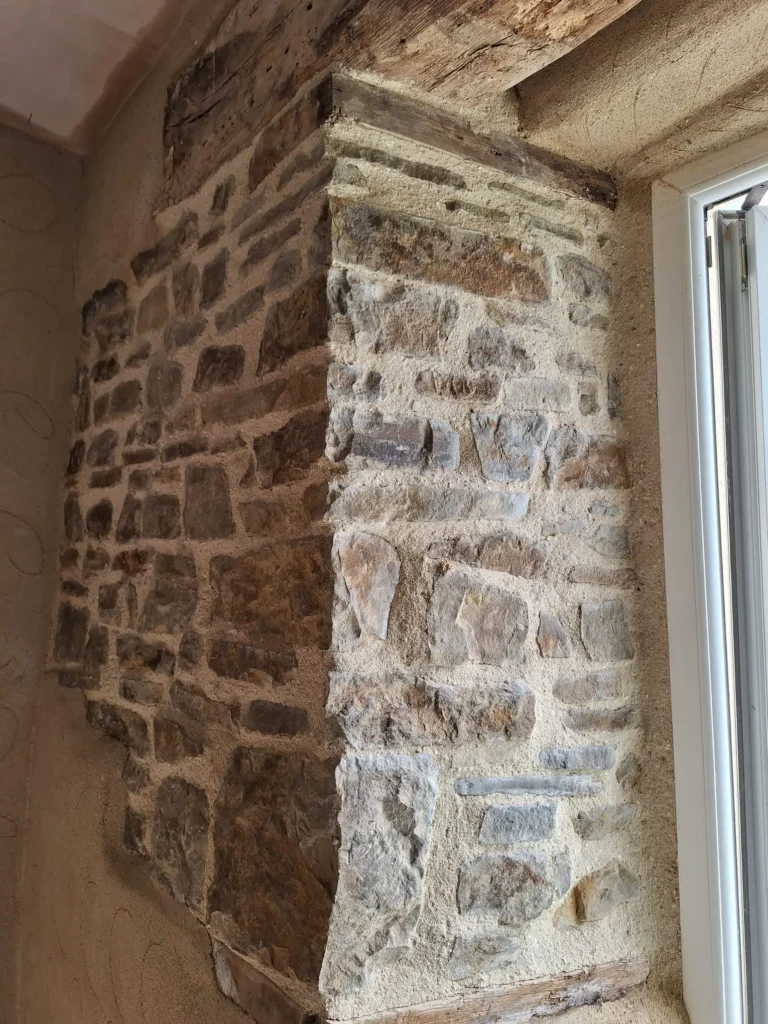
Selecting the correct mortar specification is one of the most critical decisions in any repointing project, and there’s no universal solution. The two primary options for traditional repointing are hot-mixed lime putty mortars and Natural Hydraulic Lime (NHL) mortars, with the choice dictated by stone hardness, moisture levels, and the property’s exposure to the elements.
Lime Putty Mortars- The softest and most breathable option, lime putty mortars are ideal for sheltered or interior applications, as well as delicate masonry—such as Devon’s soft red sandstone, historic cob plinths, or friable stone. Curing slowly through air carbonation, lime putty remains slightly flexible throughout its lifespan, offering the most sympathetic protection for sensitive historic fabric.
Natural Hydraulic Lime (NHL) Mortars- NHL mortars set through a hydraulic reaction as well as carbonation, making them ideally suited for exposed West Country locations, ground-level moisture, or walls subjected to heavy driving rain and coastal winds. Available in varying grades—NHL 2, NHL 3.5, and NHL 5—the strength is carefully chosen to match the hardness of the original stone and the severity of the weather exposure. It stands up to harsh conditions while remaining vastly more breathable and flexible than cement.
The correct specification is always determined during an initial site inspection. I never select a mortar from a catalogue based on aesthetics alone—it is always specified based on what the wall actually needs to stay healthy.
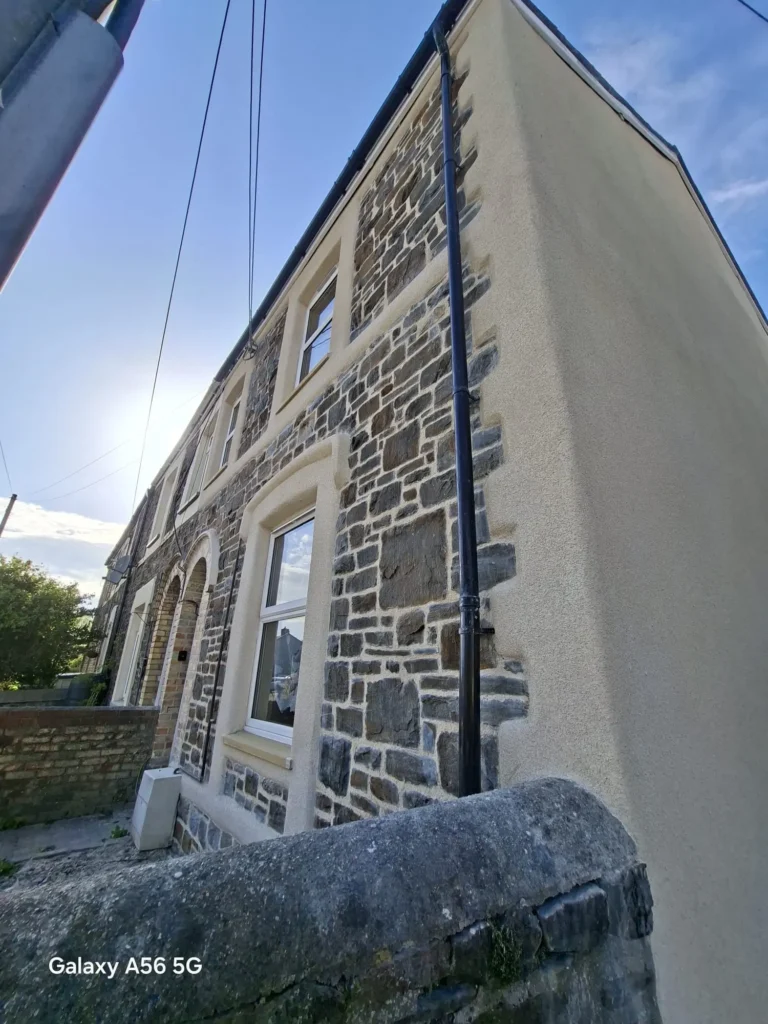
Every re-pointing job is different and requires an in person visit to assess and quote the work required. Elements such as access, removal of any cement based mortars, scaffolding and potential repairs will all be taken into consideration.
The existing joints, masonry condition and moisture levels are assessed before anything is touched. Where cement pointing is present, the extent and depth of removal required is established at this stage.
Where cement repointing is present it needs to come out carefully, raking, cutting and hand tooling to avoid damaging the surrounding masonry. This is time-consuming work but it’s non-negotiable. Leaving cement in place and pointing over it doesn’t fix the problem.
Joints are raked back to a suitable depth, cleaned out and dampened down prior to application. Proper preparation is what separates pointing that lasts from pointing that fails within a few years. Joints must be square at the back and ready to take new mortar.
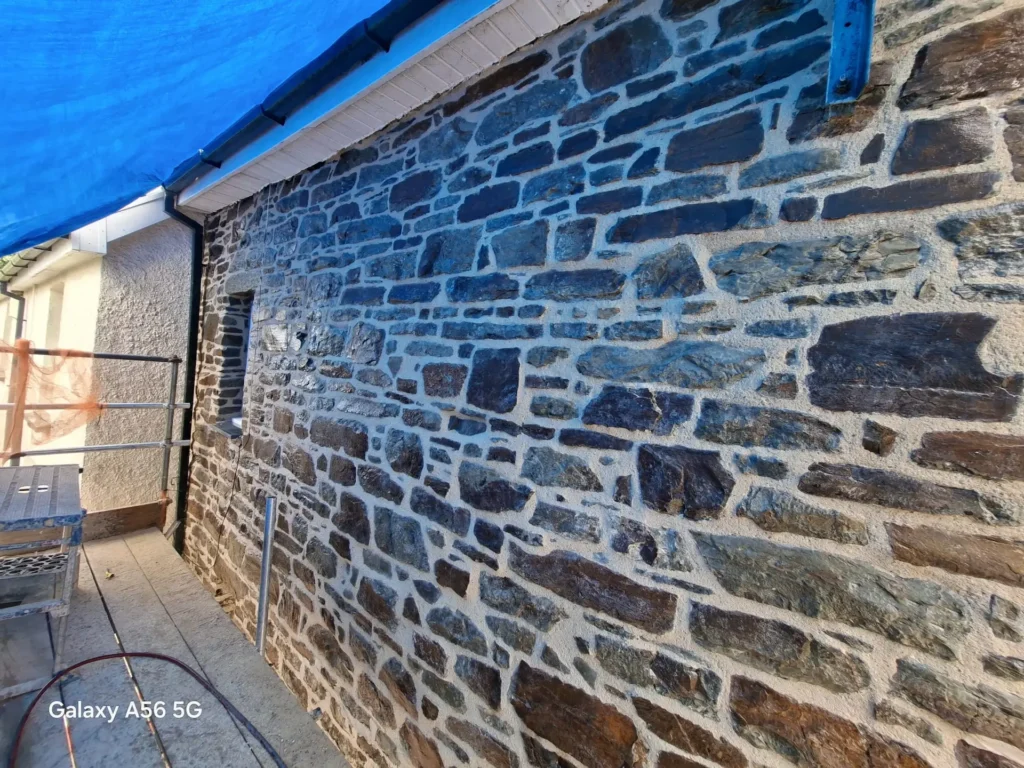
Mortar is applied in lifts where joints are deep, worked into the joint thoroughly and finished to an appropriate profile for the building — whether that’s a flush, weatherstruck or slightly recessed finish. The profile matters both aesthetically and practically.
Fresh lime mortar needs protection from frost, direct sun and drying winds while it cures. Proper curing management is a crucial part of the job, not an afterthought. Hessian Sheeting is hung to protect the new lime mortar whilst it carbonates.
Decayed stonework, cob and rotten timber lintels often only come to light once old, failing cement or render is removed. Across Devon’s historic housing stock—from granite farmhouses and slate rubble cottages to traditional cob structures—We frequently handle stone repairs and lintel replacements alongside repointing work.
Whether it’s replacing compromised timber lintels over window and door openings or repairing spalled stonework with breathable, lime-based mortar repairs, I ensure structural stability without damaging the historic fabric.
Every stone repair and lintel installation follows the exact same standard: using breathable, compatible materials and traditional techniques that preserve the structural integrity and authentic character of your property.
From transforming just one problematic wall in a thatched cob cottage in Tavistock through to complete lime restoration projects for country estates around Totnes, we handle a wide variety of work across Devon. Here’s what clients have to say about working with us!
EXCELLENT Based on 33 reviews
 Posted on Google
 Tuppy MHad the pleasure of using Adam and his team. Super talented and such an expert in his field. So pleased with his work. 100 percent recommend him, will be having more work in the future. I have a background in interior design work and he is definitely the best!Posted on Google
 Marcus WoodsAdam and his team did a fantastic job insulating and plastering the upstairs of our old house. Knowledge was good, communications strong and all left clean and tidy at the end. We will definitely be having them back later in the year when we move on to getting the downstairs done.Posted on Google
 Jayne EastAdam and his team were really hard working, efficient and tidy. They arrived on time on every visit. They left the room tidy after each work session. They are very pleasant and friendly. They have totally transformed a very tired bedroom that had had terrible things done to it over the years such as wallpaper applied to the lime plastered walls and ceiling. We can now complete the transformation by sanding the floorboards and decorating. Can highly recommend them.Posted on Google
 Martyn Campbell (Dartmoor Construction)Fantastic company! We have used Adam and his team when we’ve needed specialist plastering on our own jobs.. Experienced, knowledgeable, clean and tidy and a friendly bunch to have around.Posted on Google
 Jo JoReview from: Jo May Adam and his team completed an interior and exterior lime rendering job for me over the summer 2025. Adam was possibly the most reliable tradesman I’ve ever dealt with. Kept in touch, turned up and completed the job in the time specified and helped me trouble shoot anything that came up. I am really really pleased with the work and have had many compliments from other people. No hesitation in recommending Thorne’s plastering traditional specialists.Posted on Google
 logan stewartadam , mike, glover,paul all brillantPosted on Google
 Mike ClarkeAdam, Mike and Paul have done a fantastic job on our Grade 2 listed house. Old concrete render removed and re-rendered in lime. Thoroughly professional, knowledgeable and willing to go that extra yard to produce a fantastic finish on the place at a fair price. Thanks Adam, we will be looking to use your skills againPosted on Google
 Brian LeechAdam and his team were very professional and pleasant to deal with. They did a fantastic job on our house. We would highly recommend themPosted on Google
 Carol RodgersIt was very apparent from the day he arrived to quote that Adam has a huge amount of knowledge and experience in working on older properties. Right from the start I was filled with confidence in his abilities and this was further established on the day the team arrived to start work on the project. Adam and his team were pleasant, friendly, punctual, hard working and tidy. Adam was prompt with answering messages and communicated well on my queries regarding the work. He gave me reassurances that any additional work, regarding issues found, would be discussed and priced before continuing. Thankfully no additional work was needed and the final price was exactly as quoted. In essence, Thorne's Plastering did an excellent job taking old plaster back to cob and applying lime plaster in our 300 year old cottage and delivered a great quality of work. We would highly recommend these guys and look forward to working with them again.Posted on Google
 Howard CannWe wouldn’t hesitate to recommend Thornes plastering. We met Adam and his team during the renovation of our stone and cob cottage. They did some plastering but also some more structural work replacing some oak lintels and repairing a crack in the cob. You couldn’t meet a nicer team and we will definitely be using them again.Verified by TrustindexTrustindex verified badge is the Universal Symbol of Trust. Only the greatest companies can get the verified badge who has a review score above 4.5, based on customer reviews over the past 12 months. Read more
If you’re looking for lime plastering, lime pointing or traditional building repairs in Devon then please feel free to get in touch via the form below.
Every property and every job is a unique story, requiring an in-person survey to enable us to give you the best advice. To arrange a tailored on site quote, please use the form below or give us a call to get in touch.
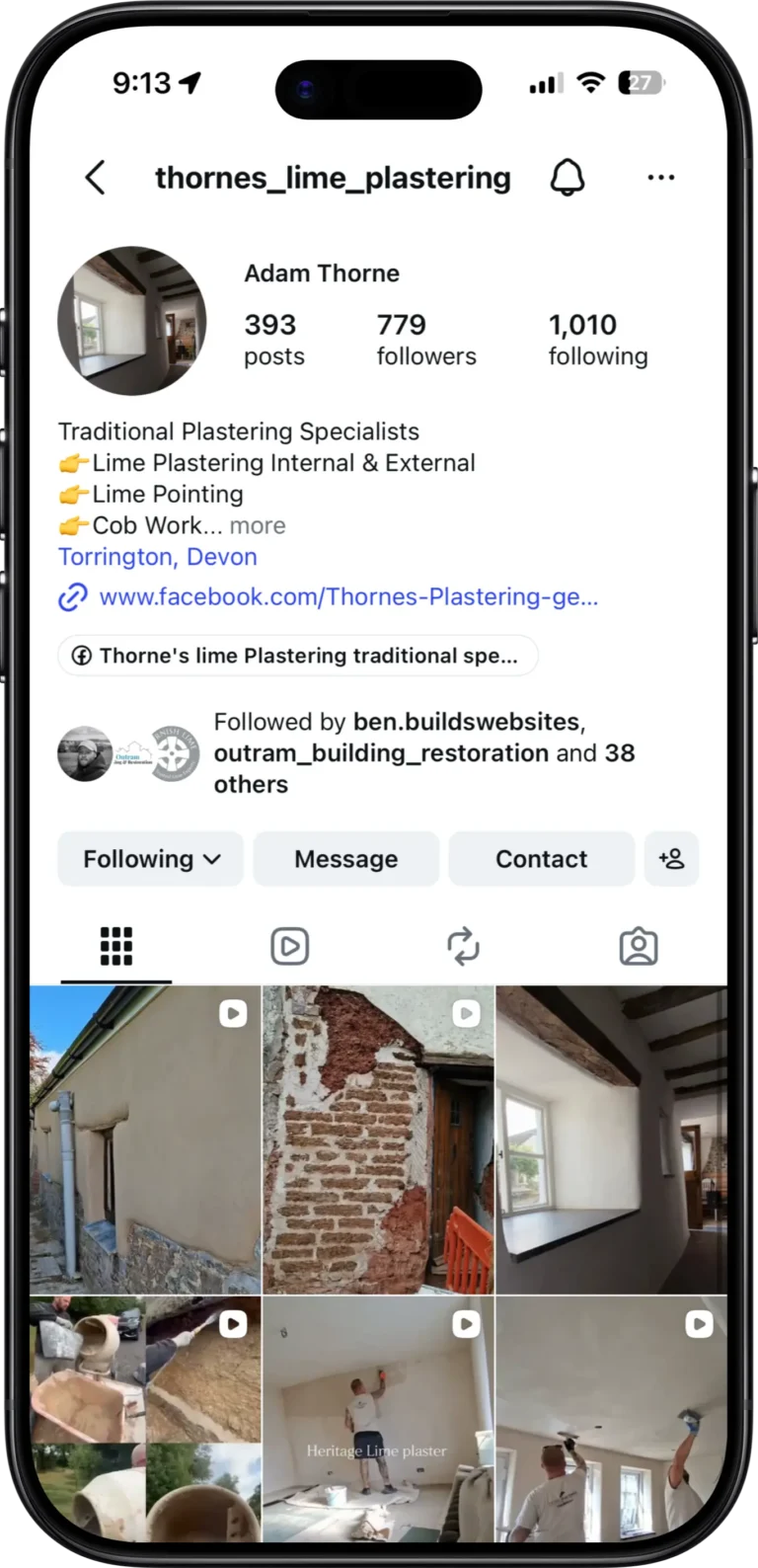
I regularly post all of our current lime plastering and lime pointing work across Shropshire and daily updates on Instagram! Give me a follow or check out my page to keep up to date or get touch.
Lime pointing and repointing raises a lot of questions — particularly for homeowners who’ve had cement repointing done in the past and are starting to notice the consequences. Below are the questions I hear most often from Shropshire homeowners considering lime repointing for the first time. If yours isn’t on the list, give me a call — I’m happy to talk through what your walls need before any work is committed to.
Cement pointing is usually fairly obvious once you know what to look for — it tends to be harder, greyer and more uniform in colour than the surrounding stone or brick, often slightly proud of the masonry face or with a very sharp, clean profile. In older properties, if the pointing looks noticeably newer or harder than the rest of the wall, there’s a good chance it’s cement. Cracking along the masonry face rather than through the joint is another strong indicator that cement is doing damage.
Yes, pointing lime mortar over existing cement doesn’t resolve the underlying breathability problem, and the two materials won’t bond or perform well together. The cement needs to be carefully removed first, which is time-consuming but essential. The depth of removal matters too, raking back 20–25mm is typically the minimum to get a joint that will hold properly..
A well-specified and properly applied lime mortar joint on a traditional building should last many decades — some historic lime pointing has been in place for well over a century. The key factors are correct mortar specification for the masonry type, thorough joint preparation, and appropriate curing after application. Lime pointing applied correctly outlasts cement repointing on traditional buildings without question.
Lime mortar and frost don’t mix — fresh lime pointing needs protection from freezing temperatures while it cures, which typically rules out working in conditions where overnight frost is forecast. As a general guide, lime pointing is best carried out between April and October in Devon, though mild spells outside those months can be workable with appropriate precautions. I’ll always factor seasonal conditions into project planning.
Getting a close colour match takes experience and careful aggregate selection — the sand and aggregate used in the mortar has the biggest influence on the finished colour. On jobs where visual continuity is important, I assess the existing mortar and work to replicate it as closely as possible. It won’t always be an exact match, particularly on very old or unusual mortars, but a sympathetic result that sits naturally against the masonry is always the aim.
Yes, and it often makes sense to deal with stone repairs and repointing together rather than as separate jobs. Spalled or eroded stone is repaired using compatible lime-based mortars matched to the surrounding masonry, consolidating the wall properly before the pointing is finished. Leaving damaged stone in place and pointing around it is a short-term approach that usually leads to further deterioration.
Absolutely — lime mortar is the correct choice for any traditionally constructed solid-wall building, whether it’s built from stone, handmade brick, or a combination of both. The mortar specification will differ depending on the hardness and porosity of the brick, but the principle is the same: the joint should always be softer than the masonry it sits between, and it should always be breathable.
For most unlisted properties, lime repointing is considered routine maintenance and doesn’t require planning permission. For listed buildings, any repointing work — even like-for-like in lime — may require listed building consent depending on the local authority and the extent of the work. It’s always worth checking with your local planning authority before starting on a listed property. I’m familiar with the requirements for historic buildings across Devon and happy to advise on what’s likely to be needed.


Traditional lime pointing demands patience, authentic materials, and a deep understanding of West Country building methods. In our wet maritime climate, it’s certainly not a process that benefits from shortcuts or improper specifications. Working exclusively with traditional lime means every mortar blend, joint finish, and material decision is made to protect your property’s long-term health—never for speed or convenience.
Covering: Tavistock, Totnes, Exeter, Dartmoor, Chagford, Okehampton, Newton Abbot, Plymouth, Truro, and heritage projects across Devon and Cornwall.
From thatched cob cottages and Dartmoor stone farmhouses to historic townhouses and heritage buildings, I work alongside homeowners, architects, and property custodians across Devon who value authentic materials and sympathetic restoration.
Whether your building needs traditional internal lime plastering, historic lime pointing, cob wall stabilization, stonework repairs, or structural timber lintel replacements, every job is rooted in a clear understanding of how period properties manage moisture. By employing compatible lime mortars and traditional craftsmanship, I ensure the character, structural integrity, and long-term health of your property are preserved for generations to come.
Sensitive repairs and traditional lime work for protected and historic properties.
Breathable lime mortars and repairs designed to work in harmony with traditional stone construction.
Helping maintain the character and performance of Devon’s historic rural buildings.
Traditional materials and craftsmanship suitable for buildings of historic significance.
Experience working with lime-based materials appropriate for places of worship and historic community buildings.
Supporting sensitive restoration projects where preserving original fabric and breathability is paramount.
Three-coat lime plaster systems using traditional non-hydraulic lime mortars.
Improve comfort and thermal performance of older properties whilst maintaining breathability.
Traditional cob repairs and lintel replacements
Breathable repointing for stone and brick buildings using appropriate lime mortars.
WhatsApp us
Currently Accepting New Projects
Traditional Lime Plastering and Heritage Lime Pointing Services for Devon’s Older Properties.
Send A Message
Fill in the form below and I will be in touch as soon as possible to discuss your requirements.
No spam. Your details are only used to contact you regarding your enquiry.