
Lime plastering is the foundation of my business, and a craft I’ve honed since my teenage years. Based in Devon, I serve period property owners across the county—from coastal towns to Dartmoor villages—delivering traditional lime plastering for heritage homes, listed cottages, and historic estates.
Older South West properties were built to breathe, meaning modern plaster products do far more harm than good. Gypsum seals in moisture, cement creates rigid stress points, and both inevitably lead to damp and blown plaster. A traditional three-coat lime plaster system (scratch coat, float coat, and top coat) allows moisture to evaporate naturally while moving sympathetically with the structure.
My approach as a Devon lime plaster specialist is simple: evaluate the original substrate, specify the correct lime mix, and allow every coat the precise time it needs to set. Lime requires patience and proper technique—there are no quick fixes, and I don’t compromise on quality.
Whether you’re restoring a cob cottage, fixing blown plaster, or tackling persistent damp in solid walls, I’m happy to offer practical advice and inspect your property.
Across Devon, traditional solid-wall buildings—especially classic cob cottages, stone farmhouses, and period townhouses—were constructed long before cement and gypsum existed. Built to work with lime from day one, these properties require breathable, flexible materials during any restoration. Using modern products on historic walls doesn’t just spoil their authentic character; it leads to severe, long-term structural issues.
In the South West’s damp maritime climate, breathability is essential. Traditional solid walls handle rain and ground moisture by letting it evaporate freely through the surface. Lime plaster supports this natural cycle, whereas modern cement and gypsum trap water inside the wall—leading to timber rot, blown plaster, and persistent damp problems.
Flexibility matters equally. Older Devonshire properties shift naturally with the seasons. Lime plaster moves with the building without cracking. Hard, brittle modern plasters refuse to give, causing stress fractures and damaging original cobwork and historic masonry.
For period properties in Devon, choosing lime plastering isn’t simply an aesthetic choice—it’s the best way to protect your building for the future.
Three-coat lime plaster systems using traditional non-hydraulic lime mortars.
Improve comfort and thermal performance of older properties whilst maintaining breathability.
Traditional cob repairs and lintel replacements
Breathable repointing for stone and brick buildings using appropriate lime mortars.
If you’ve never had lime plastering done before, it can feel like a very different experience. It’s nothing like a tradesperson turning up, skimming a wall in an afternoon, and disappearing in a flash. Lime plastering is a multi-stage process where each layer requires curing time to build breathability and strength. That extra care and patience is precisely what makes it so long-lasting. Here’s what the process typically looks like on a traditional Devon cob or stone property.
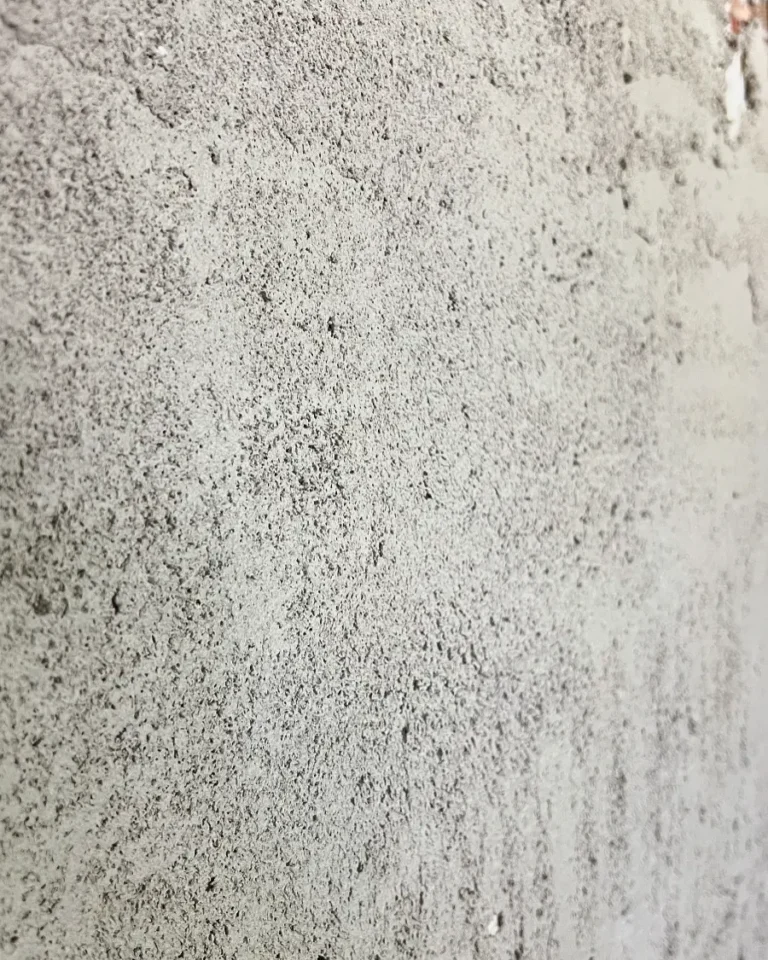
A coarse, thrown-on base coat used on very uneven or porous substrates — particularly rough stone walls. It creates a key for the next layers above and evens out the worst of the surface variation before any buildout work begins. This coat is left to carbonate for around a week in normal conditions before the next steps begin.
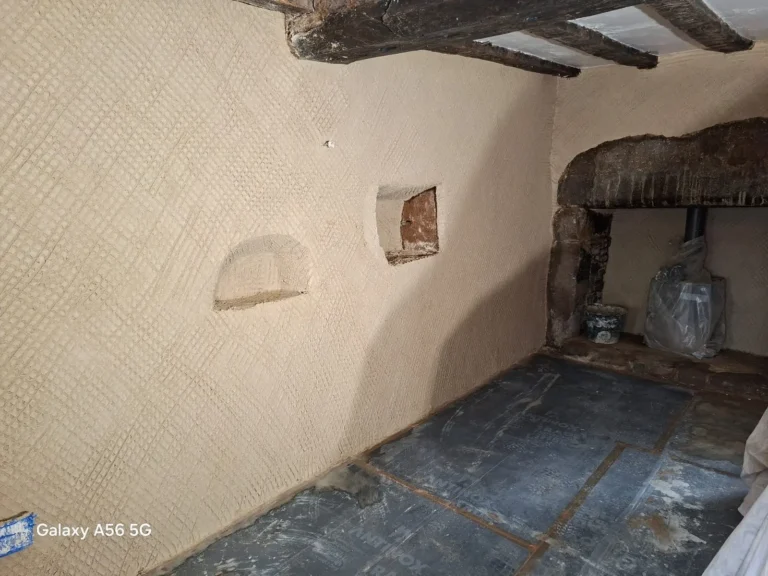
Deep hollows, missing sections and uneven areas are built up first – this is the ‘dubbing out’. The scratch coat, the first ‘layer’ of plaster then goes over the whole surface, forming the structural base of the plaster system. It’s keyed in a diamond shape pattern while still green to help the next coat (the float coat) bond. There is usually a small gap of time between dubbing out and applying the scratch coat to allow the dubbing out to set and carbonate properly.
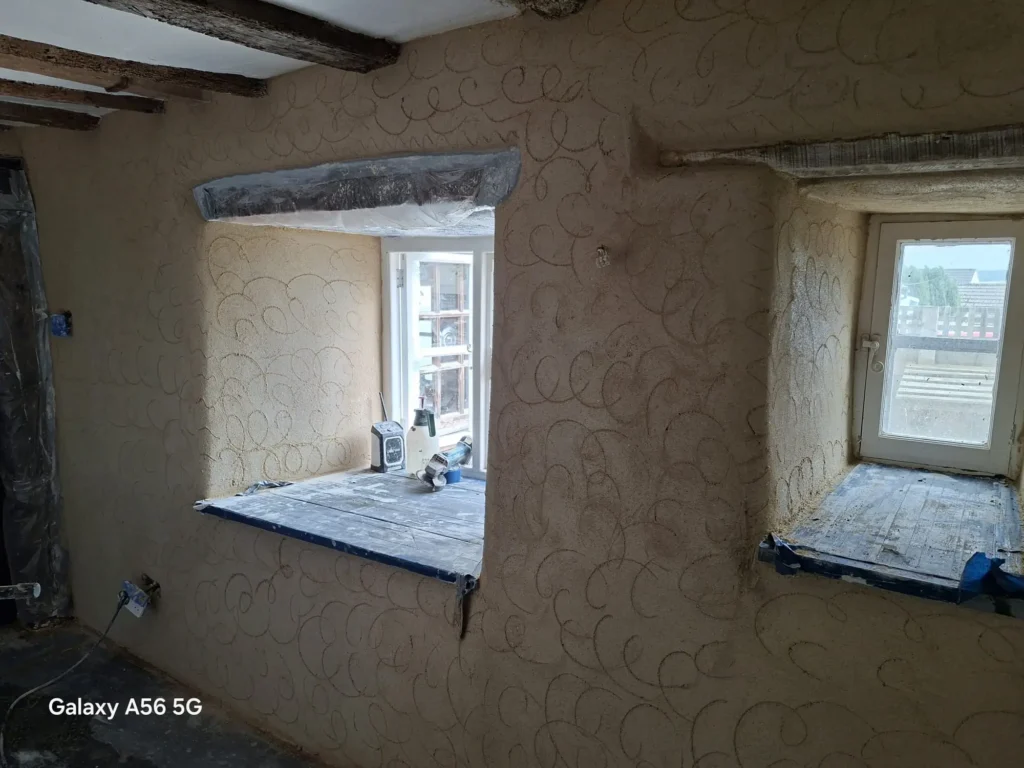
Applied once the scratch coat has cured sufficiently, the float coat brings the wall to a true, flat plane. This is where the real skill lies, getting the surface level and consistent before the finish goes on. That being said, depending on the ‘plumbness’ and level of the walls of the property, how flat and true you wish your walls to be is entirely up to you. If you prefer a slightly vernacular ‘wonky, old cottage’ finish that is fine too. Upon the initial quote and site visit, we can discuss the finish and end result you are looking for. Some clients even leave the float coat as the final coat if seeking an ‘olde worldy’ finish. The float coat is rubbed up traditionally with a wooden float with nails slightly protruding the surface of the float to scour a slight key into the float coat ready for the final skim coat to bond to.
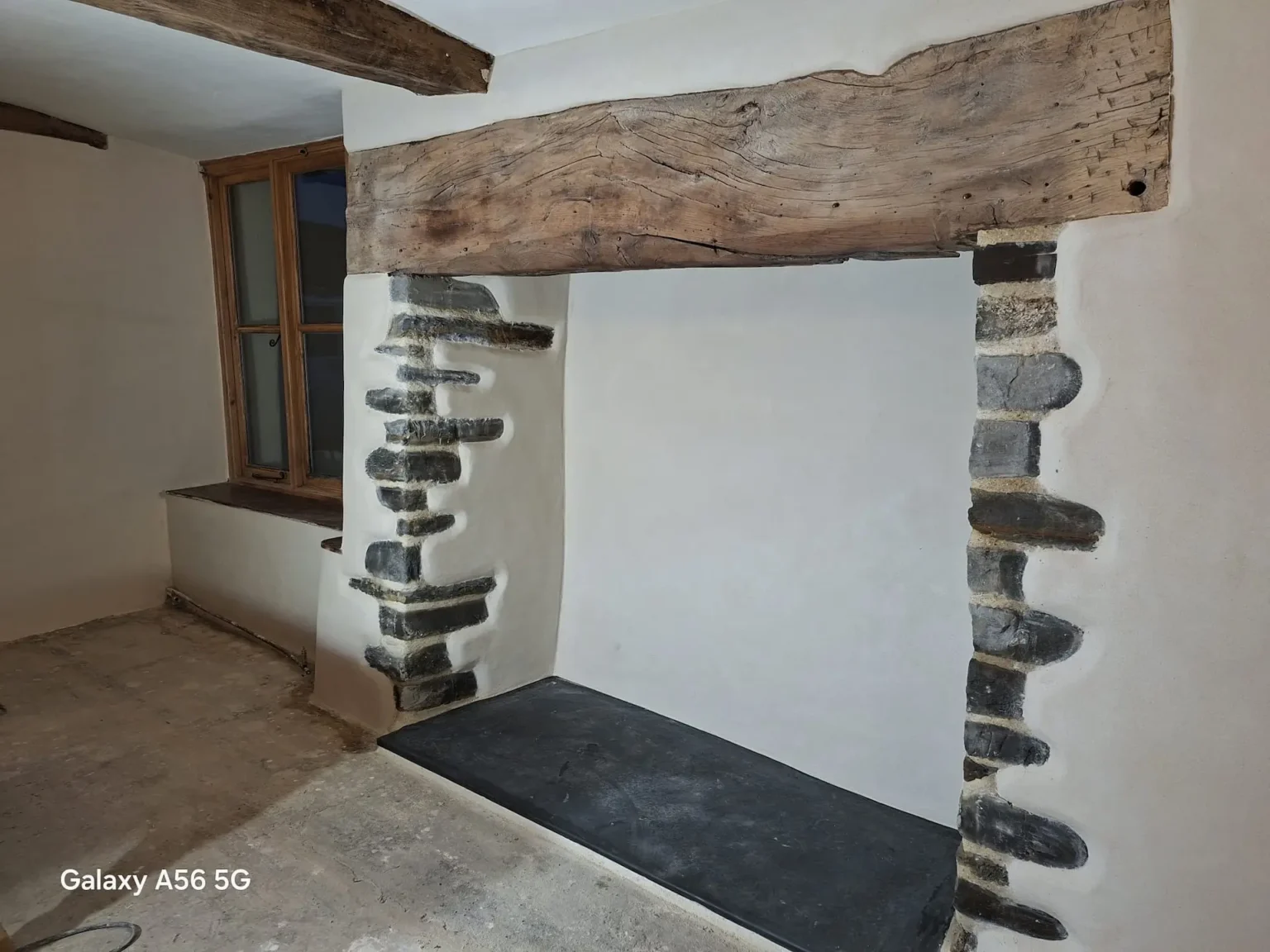
The final layer. Applied thin (usually 2mm, 3mm at most)and worked to a smooth or textured finish depending on the building and your preference. This is what you see and decorate but everything beneath it is what makes it last. The ‘finish’ of lime plaster does tend to vary, depending on the property/background masonry at times as well as features surrounding the plaster such as beams etc. A difference in finish is always to be expected when working with natural materials however I always aim for smooth and flat. This is all part of the charm that makes lime plaster such a great choice for your property.
Whether you need to rectify failing plaster on an original cob wall, strip away harmful gypsum from a period home, or execute a complete internal restoration using authentic breathable finishes, properly applied lime plaster makes all the difference. I approach every project with a clear understanding of South West building methods, diagnosing underlying moisture issues and applying lime systems that protect the property for generations.
From thatched cob cottages and granite farmhouses to Georgian townhouses and listed estates, I deliver traditional lime plastering for clients across Devon and Cornwall who value long-term building health and authentic craftsmanship.
Covering: Tavistock, Totnes, Exeter, Dartmoor, Chagford, Okehampton, Newton Abbot, Plymouth, Truro, and projects throughout Devon, Cornwall, and surrounding regions.
Sensitive repairs and traditional lime work for protected and historic properties.
Breathable lime mortars and repairs designed to work in harmony with traditional stone construction.
Helping maintain the character and performance of Devon’s historic rural buildings.
Traditional materials and craftsmanship suitable for buildings of historic significance.
Experience working with lime-based materials appropriate for places of worship and historic community buildings.
Supporting sensitive restoration projects where preserving original fabric and breathability is paramount.
If you’re looking for lime plastering, lime pointing or traditional building repairs in Devon then please feel free to get in touch via the form below.
Every property and every job is a unique story, requiring an in-person survey to enable us to give you the best advice. To arrange a tailored on site quote, please use the form below or give us a call to get in touch.
I regularly post all of our current lime plastering and lime pointing work across Shropshire and daily updates on Instagram! Give me a follow or check out my page to keep up to date or get touch.
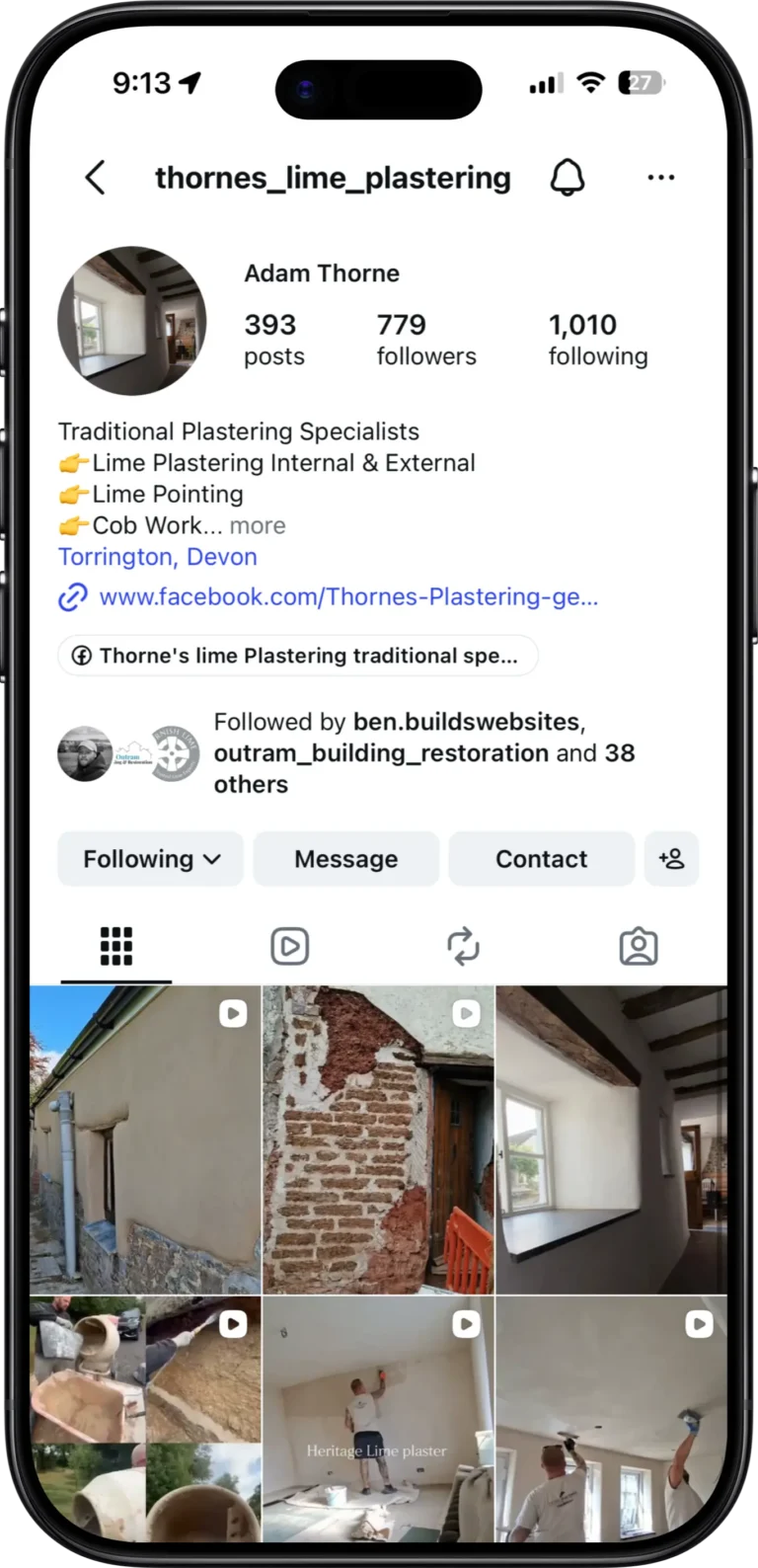
From transforming just one problematic wall in a thatched cob cottage in Tavistock through to complete lime restoration projects for country estates around Totnes, we handle a wide variety of work across Devon. Here’s what clients have to say about working with us!
EXCELLENT Based on 33 reviews
 Posted on Google
 Tuppy MHad the pleasure of using Adam and his team. Super talented and such an expert in his field. So pleased with his work. 100 percent recommend him, will be having more work in the future. I have a background in interior design work and he is definitely the best!Posted on Google
 Marcus WoodsAdam and his team did a fantastic job insulating and plastering the upstairs of our old house. Knowledge was good, communications strong and all left clean and tidy at the end. We will definitely be having them back later in the year when we move on to getting the downstairs done.Posted on Google
 Jayne EastAdam and his team were really hard working, efficient and tidy. They arrived on time on every visit. They left the room tidy after each work session. They are very pleasant and friendly. They have totally transformed a very tired bedroom that had had terrible things done to it over the years such as wallpaper applied to the lime plastered walls and ceiling. We can now complete the transformation by sanding the floorboards and decorating. Can highly recommend them.Posted on Google
 Martyn Campbell (Dartmoor Construction)Fantastic company! We have used Adam and his team when we’ve needed specialist plastering on our own jobs.. Experienced, knowledgeable, clean and tidy and a friendly bunch to have around.Posted on Google
 Jo JoReview from: Jo May Adam and his team completed an interior and exterior lime rendering job for me over the summer 2025. Adam was possibly the most reliable tradesman I’ve ever dealt with. Kept in touch, turned up and completed the job in the time specified and helped me trouble shoot anything that came up. I am really really pleased with the work and have had many compliments from other people. No hesitation in recommending Thorne’s plastering traditional specialists.Posted on Google
 logan stewartadam , mike, glover,paul all brillantPosted on Google
 Mike ClarkeAdam, Mike and Paul have done a fantastic job on our Grade 2 listed house. Old concrete render removed and re-rendered in lime. Thoroughly professional, knowledgeable and willing to go that extra yard to produce a fantastic finish on the place at a fair price. Thanks Adam, we will be looking to use your skills againPosted on Google
 Brian LeechAdam and his team were very professional and pleasant to deal with. They did a fantastic job on our house. We would highly recommend themPosted on Google
 Carol RodgersIt was very apparent from the day he arrived to quote that Adam has a huge amount of knowledge and experience in working on older properties. Right from the start I was filled with confidence in his abilities and this was further established on the day the team arrived to start work on the project. Adam and his team were pleasant, friendly, punctual, hard working and tidy. Adam was prompt with answering messages and communicated well on my queries regarding the work. He gave me reassurances that any additional work, regarding issues found, would be discussed and priced before continuing. Thankfully no additional work was needed and the final price was exactly as quoted. In essence, Thorne's Plastering did an excellent job taking old plaster back to cob and applying lime plaster in our 300 year old cottage and delivered a great quality of work. We would highly recommend these guys and look forward to working with them again.Posted on Google
 Howard CannWe wouldn’t hesitate to recommend Thornes plastering. We met Adam and his team during the renovation of our stone and cob cottage. They did some plastering but also some more structural work replacing some oak lintels and repairing a crack in the cob. You couldn’t meet a nicer team and we will definitely be using them again.Verified by TrustindexTrustindex verified badge is the Universal Symbol of Trust. Only the greatest companies can get the verified badge who has a review score above 4.5, based on customer reviews over the past 12 months. Read more
Choosing the right lime plasterer for a period property isn’t just about finding someone who can trowel on a top coat. Older buildings across Devon and the South West require someone who truly understands solid stone and cob construction, why breathability is vital, and how a traditional multi-coat lime plaster system must be built up step by step.
At Thorne’s Plastering, traditional lime work is the foundation of my business. Every project—from resolving damp issues in a single room of a historic cottage to executing a full property restoration—gets the exact same care: thorough substrate preparation, authentic materials, and proper curing times. No shortcuts, no damaging gypsum products, and no rushing a process that relies on natural carbonation.
The result is lime plastering built for long-term protection: breathable, resilient, and completely sympathetic to Devon’s architectural heritage.
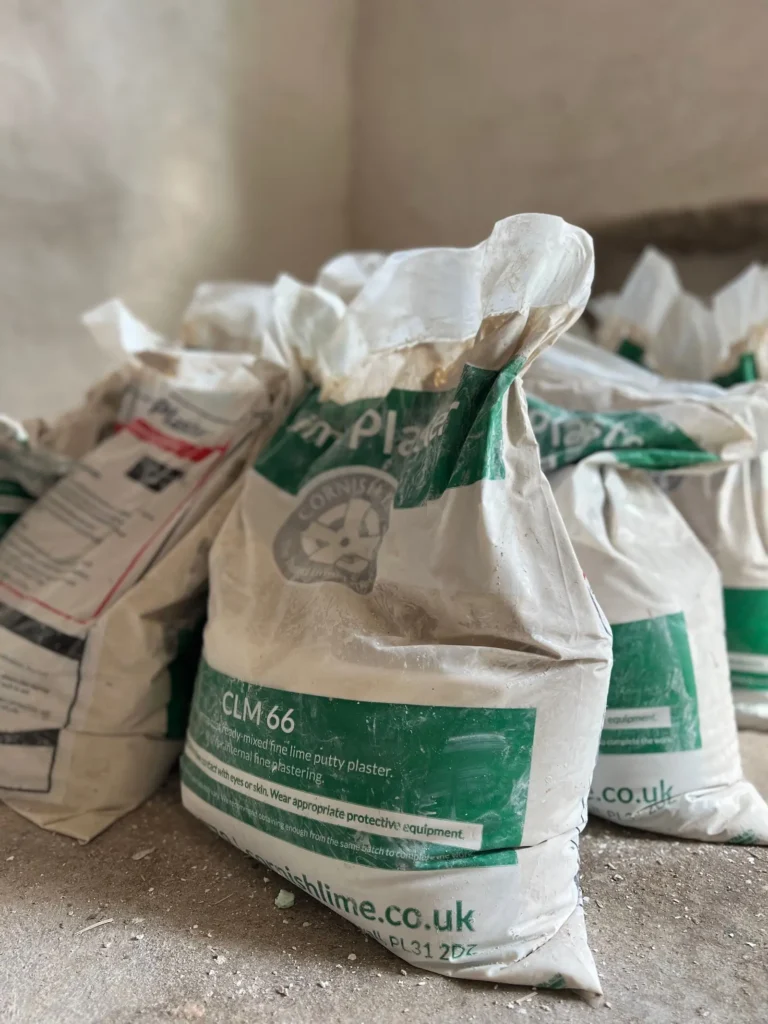
While many plasterers offer lime as an additional service, lime work is at the heart of everything I do. I have dedicated years to understanding traditional materials, historic building methods and the correct techniques required to repair and preserve older properties.
From traditional three-coat non-hydraulic lime plastering and lime pointing to stonework repairs heritage building work my focus has always been on delivering sympathetic workmanship that respects the age and character of the building. I continually invest in expanding my knowledge and work closely with some of the UK’s leading suppliers of traditional building materials, including Mike Wye, Cornish Lime and Best of Lime.
By specialising in lime rather than treating it as an occasional service, I can provide informed advice, appropriate material selection and repairs that work in harmony with traditional buildings. For me, lime isn’t simply a product I use—it’s a craft I’m genuinely passionate about.
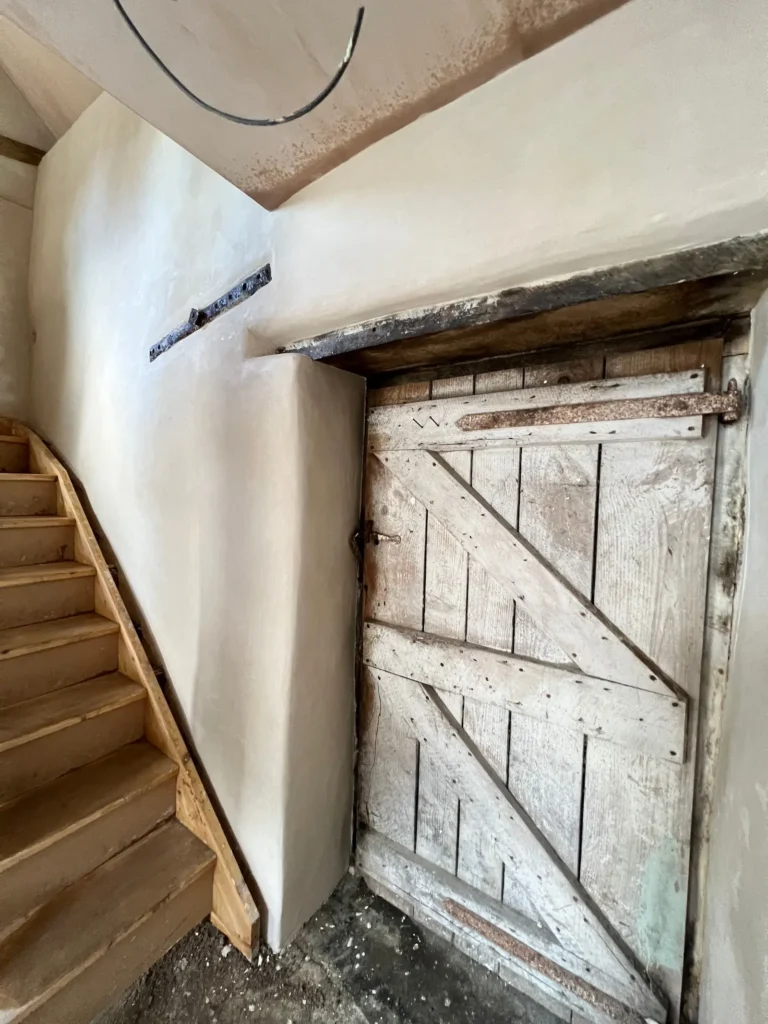


Lime plastering often raises a lot of questions, especially if you’re used to modern gypsum or trying to understand which traditional lime mix is right for your stone or cob walls. Below, I’ve answered the queries I get asked most frequently by period property owners across Devon looking into lime plastering for the first time. If your question isn’t listed here, feel free to get in touch—I’m always happy to discuss what your property needs before you make any decisions.
It depends on the building and the substrate, but for most internal work on traditional Devon properties I use non-hydraulic lime putty plaster — the softest, most breathable option and the closest to what would have originally been used. For more exposed or damp-prone areas, a natural hydraulic lime (NHL) may be more appropriate. Material selection is always based on what the wall actually needs, not what’s quickest or cheapest to apply.
Occasionally, but rarely without preparation work first. If the existing plaster is gypsum or cement-based, it needs to come off — applying lime over incompatible materials creates bonding and moisture problems that will cause the new plaster to fail. If there’s original lime plaster that’s still sound and well-keyed, it may be possible to work over it with appropriate preparation. I’ll always assess what’s there before recommending an approach.
es, and it’s one of the most common jobs we carry out on older Devon based properties. Gypsum is impermeable and has no place on a solid stone or brick wall — over time it traps moisture, causes damp patches and can accelerate masonry decay. Removing it and replacing with a properly specified lime plaster system often resolves long-standing damp issues that no amount of ventilation or treatment has fixed.
A traditional lime plaster system is three coats — scratch coat, float coat and finish coat — sometimes preceded by a harling coat on particularly rough or uneven substrates. Each coat serves a specific purpose and needs adequate time to cure before the next is applied. Cutting it down to one or two coats to save time is a false economy — the build-up is what gives lime plaster its durability and performance.
Yes, but the paint choice matters. Lime plaster needs to breathe, so it should only be decorated with breathable finishes — traditional limewash, mineral silicate paints, or breathable distempers. Sealing cured lime with a standard vinyl emulsion defeats the purpose entirely and can cause the same moisture-trapping issues you were trying to get away from. I’m happy to advise on suitable finishes as part of any project.
The common signs are hollow-sounding areas when tapped, cracking that follows the lath lines beneath, plaster that’s pulling away from the wall, or persistent damp patches that don’t respond to surface treatment. Older lime plaster does have a lifespan, particularly if it’s been subject to moisture ingress or incompatible repairs over the years. In some cases selective patching is sufficient — in others a full replaster is the right call. I’ll give you an honest assessment either way.
Getting a good match takes experience and the right material selection — aggregate type, particle size and application technique all affect the final appearance. On a listed building or a property where visual continuity matters, I take the time to assess the existing finish and work to replicate it as closely as possible. It won’t always be invisible, particularly on very old or unusual finishes, but a sympathetic match carried out properly is far less intrusive than a patch of modern plaster.
The general rule is: if your building was constructed before around 1920, it almost certainly needs lime. Properties built with solid stone or brick walls — rather than cavity walls — are designed to manage moisture through the fabric of the building. Sealing them with modern impermeable materials causes moisture to build up, leading to damp patches, peeling plaster, and even structural damage. If you’re seeing recurring damp, crumbling plaster, or efflorescence (white salt deposits) on your walls, there’s a good chance modern materials are the culprit. I’m happy to discuss what you’re seeing before you commit to any work.
Both. Not every job needs a full strip and start-again — sometimes a room has isolated areas of failure that can be cut out and patched correctly without touching the rest. Where the existing plaster is predominantly sound and the substrate is compatible, targeted repairs are a perfectly valid and cost-effective approach. The key is making sure any repair is done with compatible materials and proper preparation, otherwise you’re just deferring the problem.
Take a look at more of our recently completed projects throughout Shropshire on my portfolio page.
WhatsApp us
Currently Accepting New Projects
Traditional Lime Plastering and Heritage Lime Pointing Services for Devon’s Older Properties.
Send A Message
Fill in the form below and I will be in touch as soon as possible to discuss your requirements.
No spam. Your details are only used to contact you regarding your enquiry.